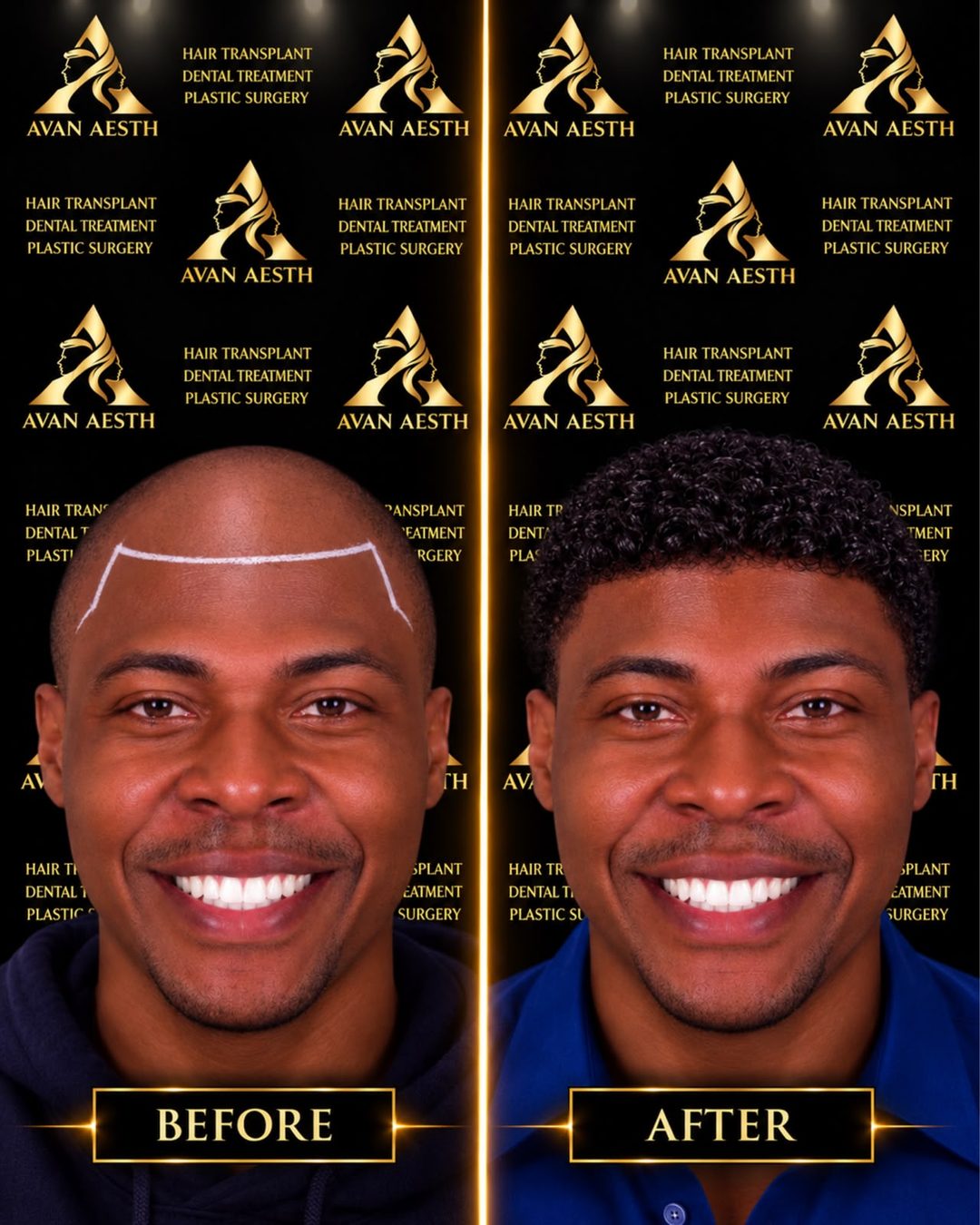
Afro hair transplant

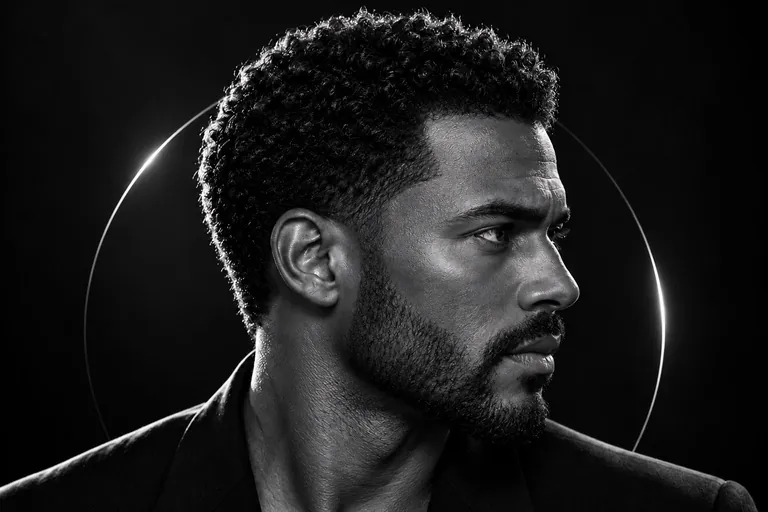
Male model with Afro-textured hair

Afro hair transplant in Istanbul

Afro-textured hair grows from curved follicles, so an Afro hair transplant needs careful planning and a team experienced with this hair type. The treating doctor assesses your scalp, donor area and skin before deciding whether a transplant is suitable.

≈ 4 h direct flight from London (≈ 10 h from New York) · Airport welcome · VIP transfer · Hotel · Interpreter in your language

What is an Afro hair transplant?

An Afro hair transplant moves hair follicles from a donor area, usually the back and sides of the head, to thinning or bald areas in people with Afro-textured hair. The basic steps are the same as in any hair transplant, but the follicles need different handling. In Istanbul, the procedure should be carried out in a licensed healthcare facility by a qualified medical team. AVAN AESTH is a patient coordination service: we do not perform treatment, but we help organise your consultation, travel and follow-up communication.

How is Afro hair different?

  • Curved follicles: Afro-textured hair is curved not only above the skin but also beneath it. The path of the follicle is harder to predict, so extraction must be slow and careful to avoid cutting or damaging the follicle.
  • Adapted technique: the team may adjust the punch size, angle and depth to the curve of your follicles. Some teams take a few test grafts first to see how the follicles run.
  • Experience matters: ask how often the team works with Afro-textured hair and how they plan extraction for your hair type.

Fuller coverage with fewer grafts

Because each curl lifts away from the scalp and covers a larger area, Afro-textured hair can create a fuller look with fewer grafts than straight hair of similar density. This does not mean that fewer grafts are always enough: the number depends on the size of the area, your donor capacity and the result you want. The treating doctor sets the graft plan after the examination.

Typical graft ranges by Norwood stage

The ranges below are for general information only. The number of grafts you need depends on the extent of your hair loss, the density you want and the capacity of your donor area. The exact number is set by the treating doctor after an examination.

Norwood stageTypical graft rangeTechnique usually plannedSuitability
Norwood 10–No transplant needed; protecting the existing hair and preventive care
Norwood 2approx. 1,000–1,850 graftsSapphire FUE / DHISuitable
Norwood 3approx. 2,000–2,950Sapphire FUE / DHI / HybridSuitable
Norwood 3 Vertexapprox. 2,500–3,700Sapphire FUE / DHI / Hybrid / FUESuitable
Norwood 4approx. 3,300–4,500Sapphire FUE / Hybrid / FUESuitable
Norwood 5approx. 4,300–5,500Hybrid / FUEDetailed assessment needed; more than one session may be required
Norwood 6approx. 4,700–6,500FUEDetailed assessment needed; donor capacity is decisive
Norwood 7No standard number–Usually not suitable; individual assessment if the donor area is sufficient

Would you like to see your Norwood stage in an illustrated chart? Message us on WhatsApp and we will send it to you.

One graft usually contains 1–4 hairs; the number of grafts is not the same as the number of hairs. A higher graft count does not by itself mean a better result.

Afro hair and the Norwood scale. The Norwood stages describe male pattern hair loss. Hair loss from tight hairstyles (traction alopecia) often follows a different pattern, mainly along the hairline and temples, so it may not match a Norwood stage. Because curved follicles cover more of the scalp, the graft numbers in the table can be lower for some people with Afro-textured hair, but donor capacity and the size of the area still decide the plan. The treating doctor sets the number of grafts after the examination.

How is the donor area assessed for Afro-textured hair?

Afro-textured hair grows from curved follicles, and the donor area at the back and sides of the head is limited, so it is assessed carefully before any graft plan is made. The treating doctor looks at donor density, the shape of the curl and how the follicles run under the skin. The scalp is also checked for keloid tendency and signs of traction hair loss. Photos of the front, top, back and sides help with a first estimate, but the number of grafts that can be moved safely in one session is decided only after the examination and written into your plan.

Keloid and scar assessment

People with Afro-textured hair and darker skin can have a higher tendency to keloids (raised, thickened scars) and to changes in skin colour after healing. Before planning, tell the team about any keloids, raised scars or pigmentation changes in you or your family, and share photos of previous scars if you can. If there is a concern, the doctor may suggest a small test area and a waiting period to see how your skin heals. Whether the procedure goes ahead is the doctor’s decision.

Hair loss from tight hairstyles (traction alopecia)

Tight braids, cornrows, weaves, extensions and some wigs can pull on the hair for years and cause traction alopecia, often along the hairline and temples. A transplant may be considered once the hair loss has stopped and the pulling has ended; transplanted hair can be lost again if tight styling continues. Some forms of scarring hair loss can look similar, so the cause must be clarified first. The treating doctor decides whether you are suitable and when the right time is.

A natural hairline

The hairline is designed together with you, based on your face, your age and the natural pattern of Afro-textured hair. Many people with Afro hair have a softer, more rounded hairline and defined temple points; the aim is a line that fits you rather than a standard shape. The direction and angle of the grafts are planned so that the curls lie naturally.

Which technique is suitable?

FUE, Sapphire FUE and DHI can all be used for Afro-textured hair when the team adapts them to curved follicles. Which technique suits you depends on your donor area, the area to be treated and how your follicles run. The treating doctor decides which method is used and explains why.

Aftercare: braids, wigs and chemical treatments

Afro hair care usually needs a few extra precautions after a transplant:

  • Tight braids, cornrows, weaves and extensions: usually avoided for at least the first few months; avoid very tight styles on the transplanted area in the long term, as they can cause traction hair loss again.
  • Wigs and hairpieces: usually not before about 3 to 4 weeks, and then only loosely fitted, without glue or tape on the treated area.
  • Chemical relaxers, texturisers and hair dye: usually not before about 4 to 6 weeks, once the scalp has fully healed.
  • Moisture and gentle care: keep the scalp clean as instructed and avoid rubbing or scratching.

Your treating team’s instructions take priority.

Beard and eyebrow transplant with Afro-textured hair

Beard and eyebrow transplants are also possible with Afro-textured hair. In the beard area, curly hairs can grow back into the skin and cause razor bumps (ingrown hairs), and keloids are more common along the jawline, so the skin is assessed carefully before planning. For eyebrows, curly donor hairs may need regular trimming and shaping to lie flat. The treating doctor decides whether a beard or eyebrow transplant is suitable.

Beard transplant · Eyebrow transplant

What your package includes

Your package includes hotel accommodation, airport welcome, VIP transfers, interpreter support in your language, the hair transplant procedure, prescribed medication, one PRP session and one mesotherapy session, an aftercare kit, the first hair wash and 2-year follow-up after treatment.

  • Hotel accommodation
  • Airport welcome: Istanbul Airport (IST) or Sabiha Gökçen (SAW)
  • VIP transfers
  • Interpreter support in your language
  • Hair transplant procedure
  • Prescribed medication
  • 1 PRP session and 1 mesotherapy session: included for every patient and given during your treatment to support the transplanted hair; the treating doctor decides on suitability.
  • Aftercare kit: special post-transplant hat, neck pillow, forehead band, shampoo and lotion
  • First hair wash
  • 2-year follow-up after treatment

The number of nights and your appointment dates are set out in your written plan.

Day by day: what an Afro hair transplant in Istanbul can look like

A typical hair transplant stay is about three days: arrival and consultation, the procedure day, and a check-up with the first hair wash before you fly home. The exact schedule is set by the medical team and written in your plan.

  1. Day 1 – arrival: airport welcome, transfer to the hotel, consultation, blood tests and final planning of the hairline and grafts.
  2. Day 2 – procedure: extraction and implantation under local anaesthesia. The procedure often takes most of the day, and you receive written aftercare instructions.
  3. Day 3 – check-up: check of the donor and recipient areas, the first hair wash and a review of aftercare. Then transfer to the airport.
  4. At home: 2-year follow-up – the schedule is in the section Follow-up after returning home.

If the doctor recommends a test area because of a keloid tendency, the plan may include a separate earlier visit or a longer interval. Book your flight only after your written treatment plan has been approved; choose your return date according to the length of stay in the plan.

If you are travelling from the UK or the US

A direct flight from London Heathrow to Istanbul takes about 4 hours, and from New York JFK about 10 hours. Turkey is 2 hours ahead of the UK in summer and 3 hours ahead in winter, and 7–8 hours ahead of New York.

  • Entry: UK travellers should check the current entry requirements in the FCDO travel advice on GOV.UK, and US travellers with the US Department of State, before booking. Entry requirements can change, so please check the current rules for your passport before you travel.
  • Insurance: planned treatment abroad is usually not covered by standard travel insurance, so ask your insurer what applies to your trip. The UK GHIC and UK EHIC are not valid in Turkey.
  • Follow-up at home: bring your treatment report and aftercare instructions so that you can show your doctor at home what was done.
  • Communication: you can ask questions in your own language before, during and after your trip.

Interpreter support in your language

From your first contact to follow-up after you return home, you are supported by an interpreter who speaks your language; interpreter support is available in all 15 languages of this website. The interpreter is with you at the examination, on the treatment day and during your stay in Istanbul, so that you can ask your questions and understand the answers in your own language.

Personalised treatment plan

Your package contents are listed under “What your package includes” on this page. Your dates and length of stay in Istanbul depend on your treatment plan; before booking, confirm them in writing together with the number of hotel nights and aftercare arrangements.

Travel and length of stay

Ask for an individual schedule before booking flights. Confirm the number of visits, review appointments and when the treating professional expects you to be fit to travel. Some treatment plans require more than one visit.

Follow-up after returning home

Questions & answers

Request information →

Hair transplant

Will my transplanted hair be curly like my own hair?

Transplanted hair usually keeps the characteristics of the donor hair, including its curl pattern, because the follicles are moved rather than changed. New hairs can look finer or straighter at first while they grow, and the texture usually settles over the following months. The final result is assessed together with the medical team after about a year.

Do I need to shave my head for an Afro hair transplant?

For FUE, the donor area is usually trimmed very short so that each follicle and its direction can be seen, which is especially important with curved follicles. Whether the recipient area also needs to be shaved depends on the technique and the plan. The team explains the options before the procedure day.

How long should hair loss from tight hairstyles be stable before a transplant?

There is no fixed rule, but many doctors want to see that the hair loss has stopped for several months, often around a year, and that tight styling has ended. Photos taken over time help show whether the area is stable. The treating doctor decides whether and when a transplant is suitable.

Can women with Afro-textured hair have a hair transplant?

Yes, it can be considered, but the cause of hair loss must be clarified first, because hair loss in women has many possible causes. Traction alopecia along the hairline is a common reason, while some patterns of hair loss on the crown need medical assessment and treatment before a transplant is discussed. The treating doctor decides whether you are suitable.

When can I wear braids, a weave or a wig again?

Loose, gentle styles are usually possible once the scalp has healed. Wigs are usually not worn before about 3 to 4 weeks and should fit loosely, without glue or tape on the treated area. Tight braids, cornrows and weaves are usually avoided for at least the first few months. Your treating team's instructions take priority.

When can I use a relaxer or hair dye after an Afro hair transplant?

Chemical relaxers, texturisers and dyes are usually not used for about 4 to 6 weeks, until the scalp has fully healed, because the chemicals can irritate the healing skin. Before the first treatment, a strand or patch test is advisable.

Do curved follicles make an Afro hair transplant harder, and is the risk of damaging them higher?

Yes, extraction is more demanding. Because the root curves under the skin, a follicle can be cut during removal if the technique is not adapted to it. Teams reduce this risk by working slowly, choosing suitable instruments and, if needed, taking a few test grafts first. The risk is never zero, and the treating doctor plans the approach for your hair. Because the curved roots are removed slowly, the procedure day can also be longer; the treating doctor tells you whether a second session may be needed. Updated: 14.10.2026 · Source: practice of the teams AVAN AESTH works with; the final decision is made at the examination

How is a natural hairline designed in an Afro hair transplant?

The design usually starts from your own features: forehead height, face shape, age and any remaining original hairline. The front edge is kept soft and slightly irregular, with single grafts placed first, so the curly hair does not look like a hard line. You see and discuss the drawn line before the procedure; the final decision is made with the treating doctor.

How is the donor area assessed for an Afro hair transplant?

The doctor usually looks at hair density at the back and sides, how strongly the roots curve, how your skin has healed in the past and whether you or your family have a history of keloids. In some cases beard hair can be considered as an additional donor source. How much can be taken safely is decided by the treating doctor.

How many grafts are needed for an Afro hair transplant?

It depends on the area to be covered, your donor capacity and the density you want. As a rough guide, smaller hairline or temple areas often need around 1,000 to 2,000 grafts, while larger areas can need more. Because curly hair covers more of the scalp, the number can sometimes be lower than for straight hair. The treating doctor sets the figure after the examination. For general ranges, see the Norwood table on this page. Updated: 14.10.2026 · Source: practice of the teams AVAN AESTH works with; the final decision is made at the examination

When does shedding start after an Afro hair transplant, and how long does it last?

Most transplanted hairs usually fall out within about two to six weeks; this is the normal shedding phase and the roots remain in place. Some people also notice shock loss, a temporary thinning of the existing hair around the treated area, which usually recovers within a few months. If shedding worries you, send photos to your treating team.

When do Afro hair transplant results start to show?

After the shedding phase, new hair usually starts to appear from around the third or fourth month, often finer at first. Between about six and nine months the curl and thickness become clearer, and the final result is usually assessed at around twelve months. Growth can be slower in some areas; the treating doctor reviews your progress with you.

What affects the success of an Afro hair transplant?

Important factors are careful extraction of the curved roots, a realistic plan for your donor area, keloid and scar assessment before the procedure, and correct handling of the grafts on the day. After the procedure, following aftercare, avoiding tight styles and attending check-ups matter just as much. A doctor experienced with curly hair makes the plan; no team can promise a specific result.

What should I look for when choosing a team for an Afro hair transplant in Turkey?

Ask how often the team works with Afro-textured hair, how they plan extraction for curved roots and whether they can show photos of their own Afro cases. Check that your keloid risk will be assessed, that the procedure takes place in a licensed healthcare facility and that you receive a written treatment plan before travelling. The treating doctor remains responsible for the medical decisions.

Can I have an Afro hair transplant if I tend to form keloids?

It depends on the examination. If you or your family have a history of keloids or thick scars, your skin's tendency to scar is assessed before a transplant, and a transplant is not recommended if it is not considered suitable. Mention this at your first contact and send photos of any scars. The treating doctor decides how the assessment is done and whether the procedure is suitable. Updated: 14.10.2026 · Source: practice of the teams AVAN AESTH works with; the final decision is made at the examination

How many days should I stay in Istanbul for an Afro hair transplant?

Most people stay about 3 days: arrival and examination, the procedure day, then the first wash and a check-up. Because curved roots are extracted more slowly, the procedure day can be long; for larger areas, the treating doctor tells you whether a second session may be needed. Your exact dates and length of stay are set out in your written plan; book your flight after you have confirmed it. Updated: 14.10.2026 · Source: practice of the teams AVAN AESTH works with; the final decision is made at the examination

Do I need to remove braids, a weave or a wig before the procedure?

Yes. Braids, weaves, extensions and wigs need to be removed at the latest 1 day before the procedure, so that the donor and recipient areas can be seen and cleaned. How short the hair needs to be depends on your plan; the team tells you in advance. For when you can wear them again, see “When can I wear braids, a weave or a wig again?” on this page. Updated: 14.10.2026 · Source: AVAN AESTH preparation information

What is included in the Afro hair transplant package?

The full package contents are listed under “What your package includes” and the 2-year follow-up schedule under “Follow-up after returning home” on this page; the treating doctor decides whether PRP and mesotherapy are suitable for you, and no advance payment is taken. Updated: 14.10.2026 · Source: AVAN AESTH package and follow-up terms

Should I stop relaxers or tight braids before my trip?

Ask the treatment team before you travel; they give you preparation instructions for your hair. Tell them about any relaxers, chemical treatments or tight braids you use, so that your plan can take them into account.
Plan your consultation

Tell us which treatment you are considering, your country and your preferred contact time. We will help you understand what information is needed for an initial assessment.

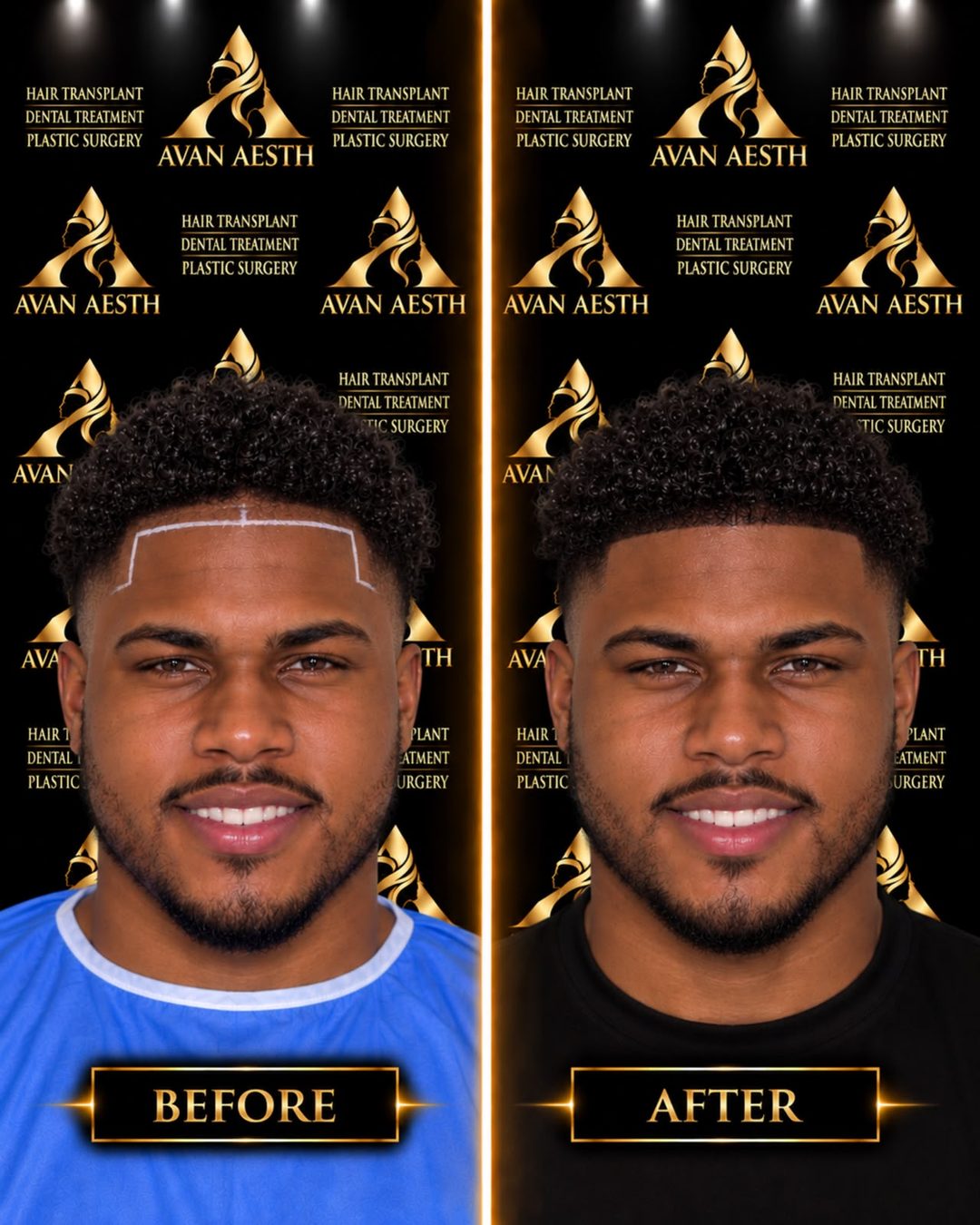
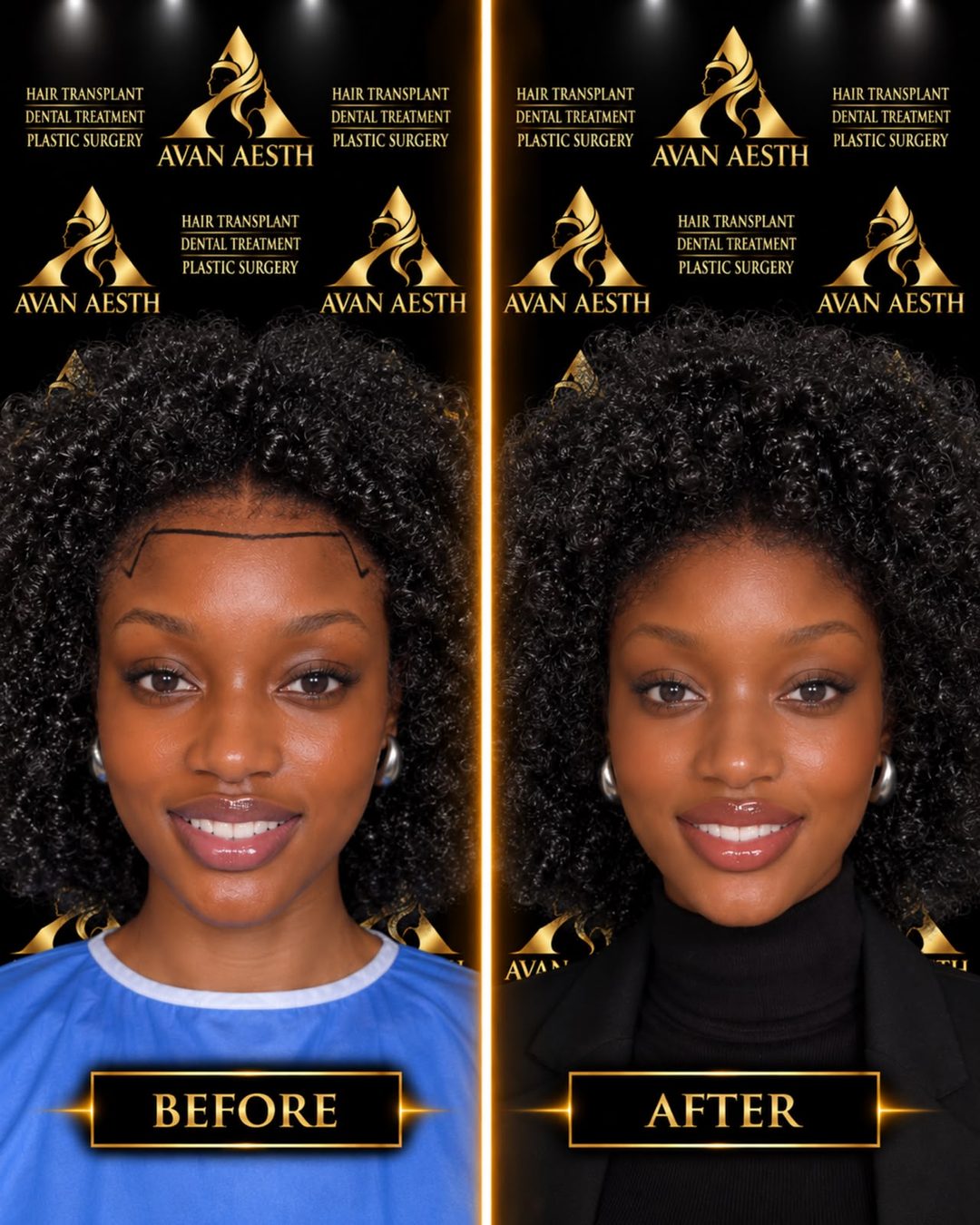
    Afro hair transplant

    Before & after

    Browse the before-and-after photographs. Results vary between individuals; these images do not predict your outcome. Ask which examples relate to the treatment you are considering.

    Planning your treatment

    Before booking, discuss your goals, suitability, alternatives and risks with the treating professional. Request a written treatment plan and realistic expectations. The plan should be based on your individual assessment.

    Last updated:

    +90 554 228 20 26 info@avanaesth.com Osmanağa Mah., Osmancık Sk., Birlik İş Hanı No:3 İç Kapı No:19, 34714 Kadıköy/İstanbul
    Skip to content Request information