Body contouring procedures compared
Body contouring procedures reshape specific areas after weight has stabilised; none of them is a weight-loss treatment. Liposuction removes localised fat, a tummy tuck removes loose skin and can repair the abdominal wall, a BBL moves your own fat to the buttocks, and six-pack surgery sculpts fat around the abdominal muscles.
| Procedure | Addresses | Usually not the first choice when |
|---|---|---|
| Liposuction | Localised fat deposits with good skin elasticity | Skin is very loose or weight is still changing |
| Tummy tuck | Loose abdominal skin and separated abdominal muscles | Further pregnancies or major weight loss are planned |
| Brazilian Butt Lift (BBL) | Buttock shape and volume using your own fat | There is too little fat to transfer |
| Six pack surgery | Muscle definition in people who are already lean | There is significant abdominal fat or loose skin |
What to discuss at your consultation
Identify whether your concern is localised fat, loose skin or both. Ask which procedure addresses that concern, where scars would be and how recovery affects daily activities. Body contouring can involve liposuction, skin-removal procedures such as a tummy tuck, or a combination planned in stages. A stable weight, skin elasticity and general health influence which option is suitable. Ask whether procedures would be combined in one operation or separated, which compression garment and activity limits apply, and when it is considered safe to fly home. Bring a list of your medications and any records of previous surgery to the assessment.
Personalised treatment plan
Your individual package includes hotel accommodation, airport welcome, VIP transfers, interpreter support and the medicines prescribed by the treating professional. Your dates and length of stay in Istanbul depend on your treatment plan; before booking, confirm them in writing together with the number of hotel nights and aftercare arrangements.
Travel and length of stay
Ask for an individual schedule before booking flights. Confirm the number of visits, review appointments and when the treating professional expects you to be fit to travel. Some treatment plans require more than one visit.
Follow-up after returning home
After you return home, we follow up with you for 2 years and we get in touch with you ourselves: close follow-up in the first week, then once a month until month 6 and every 3 months until the end of the second year.
Request information →Plastic surgery
What is the difference between a tummy tuck and Lipo 360?
A tummy tuck addresses loose or excess abdominal skin and, when indicated, the abdominal wall. Lipo 360 targets localised fat around selected torso areas. The surgeon determines the suitable approach; liposuction is not a weight-loss substitute.
Plan your consultation
Tell us which treatment you are considering, your country and your preferred contact time. We will help you understand what information is needed for an initial assessment.
2-year follow-up: once you are home, AVAN AESTH follows up with you for two years. You send photos at the times the treatment team recommends, and we pass on your questions and the answers.
For patients with heart disease or diabetes we do not coordinate plastic surgery; we refer them to a fully equipped hospital for direct assessment.
Travelling from the UK, the US or Canada? Entry, insurance and follow-up at home: read our guides for UK patients, US patients and Canadian patients. See also when we say “no”.
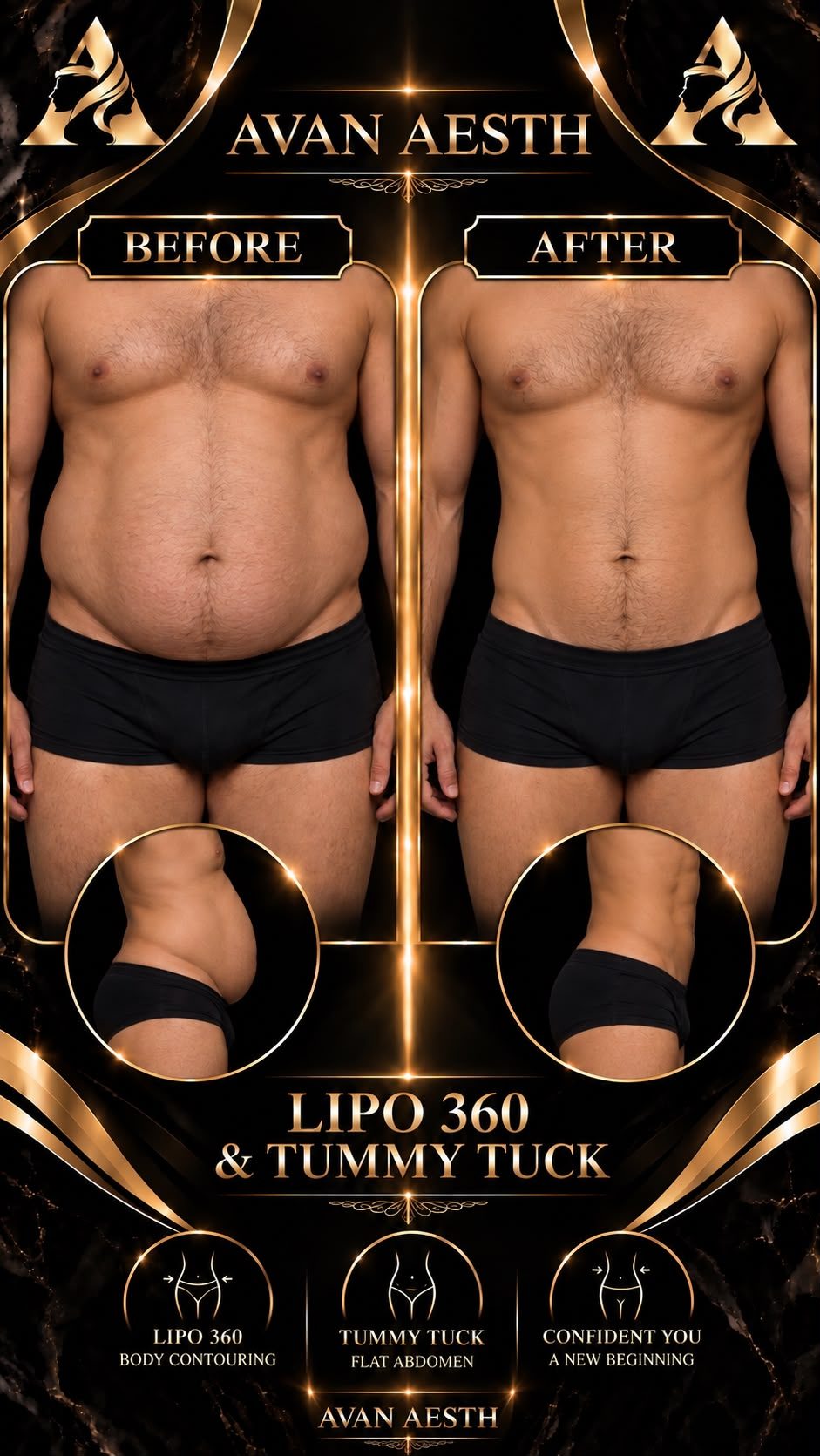
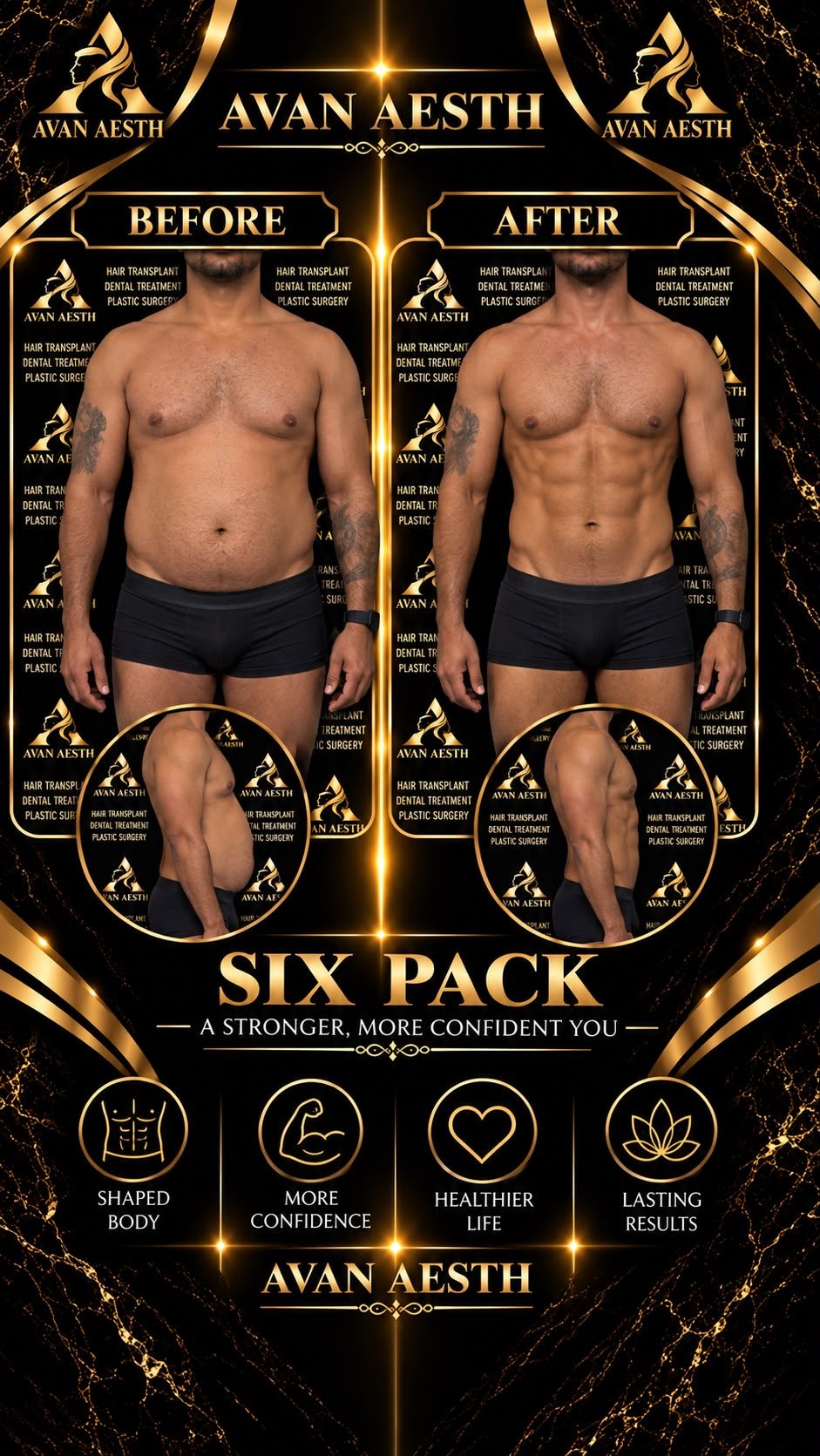
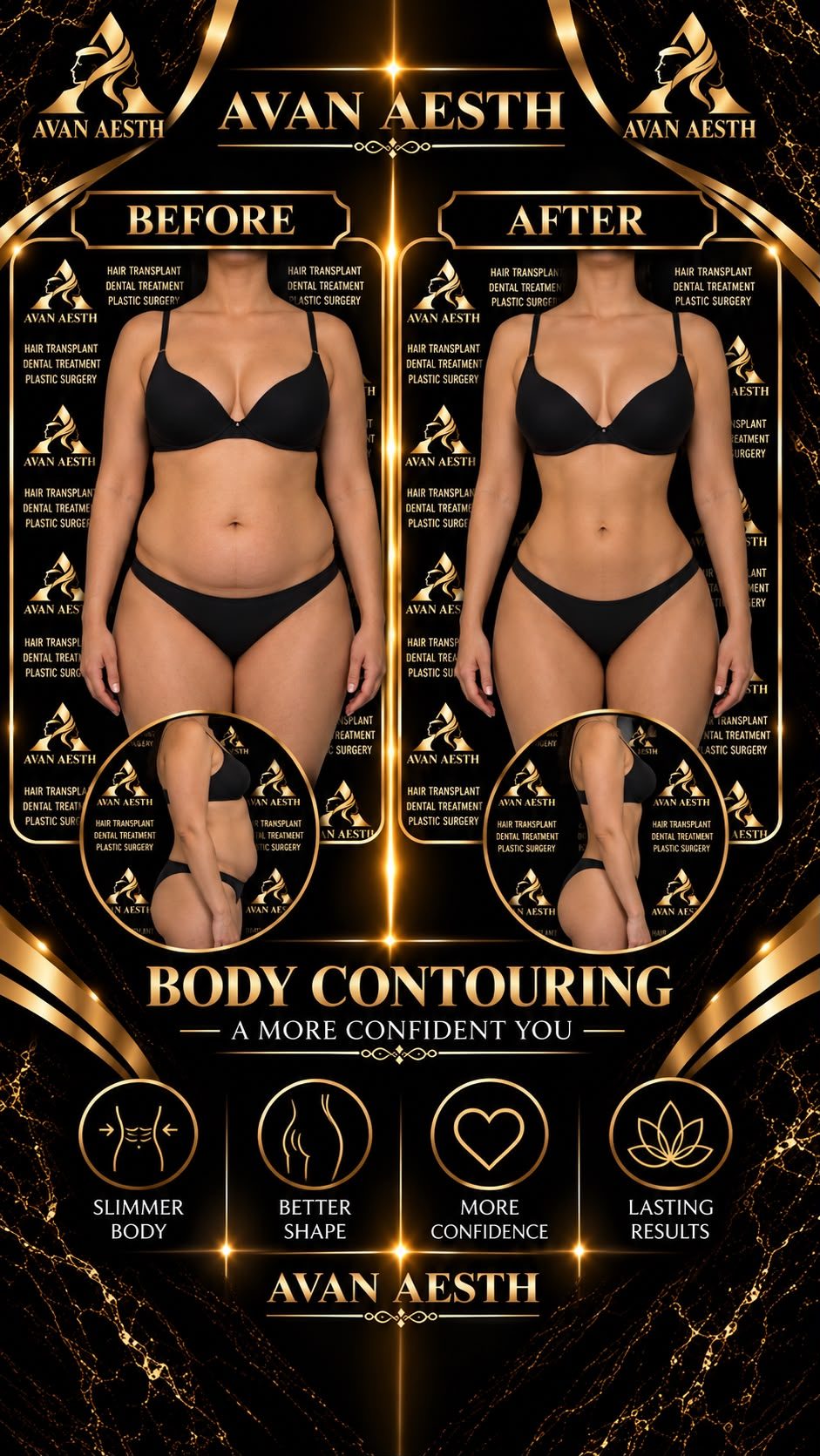
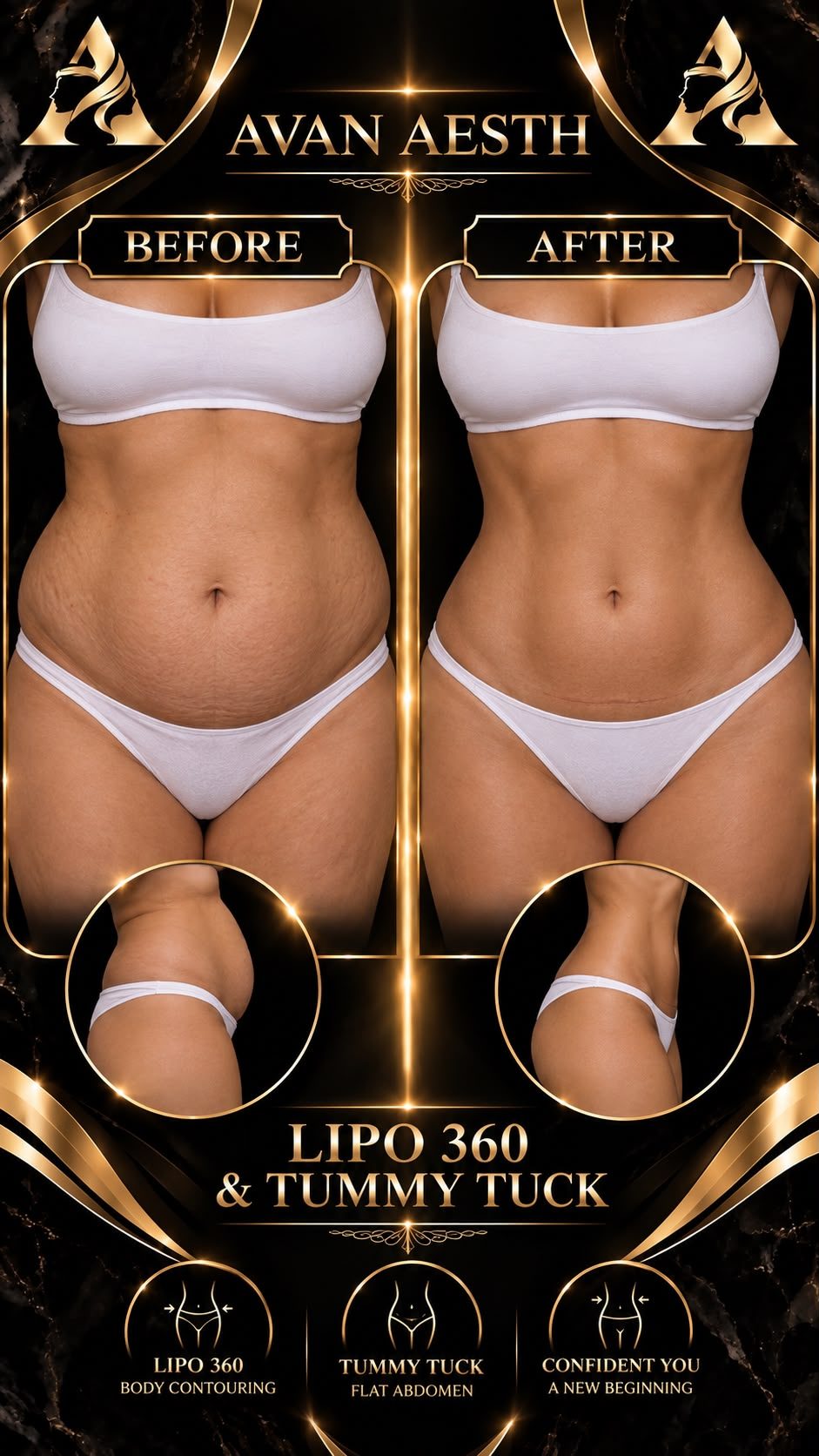
Before & after
Browse the before-and-after photographs. Results vary between individuals; these images do not predict your outcome. Ask which examples relate to the treatment you are considering.
What is body contouring?
Body contouring is an umbrella term for surgical procedures that reshape the body after weight change, pregnancy or ageing. Depending on the concern, a plan may combine fat removal, skin and muscle tightening or lifting of areas such as the abdomen, arms, thighs or back, sometimes in separate stages.
Who may be suitable for body contouring?
People at a stable weight with localised fat or loose skin that does not respond to diet and exercise may be assessed. Body contouring is not a weight-loss treatment. Smoking, diabetes, clotting problems, recent major weight loss or a planned pregnancy must be discussed with the surgeon, who decides which procedures can be combined safely. We do not coordinate plastic surgery for patients with diabetes or heart disease; we refer these patients to a fully equipped hospital.
Body contouring: What should international patients expect in Istanbul?
Share photos and your medical history for an initial review. In Istanbul the surgeon examines you, confirms which areas can be treated in one operation and arranges pre-operative tests. Afterwards you usually wear a compression garment and may have drains. The treating team explains walking, activity limits and when it is considered safe to fly home.
What is recovery like after body contouring?
Recovery depends on which procedures are combined. Swelling, bruising and tightness are expected, and a compression garment is usually worn for the period advised by the surgeon. Early walking is generally encouraged to lower the risk of blood clots, while heavy lifting and strenuous exercise are postponed. Scars continue to mature for many months.
What results can be expected from body contouring?
Results depend on skin quality, weight stability and healing. Scars are part of skin-removal procedures and mature over time, and keeping a stable weight helps preserve the outcome. Complications such as fluid collection, wound-healing problems or asymmetry are possible, and the surgeon should explain how they would be managed.
Body contouring: What is AVAN AESTH’s role?
AVAN AESTH coordinates the journey and does not perform surgery. For body contouring we pass your details to the provider for review, arrange appointments, help with accommodation, transfers and interpreter support, and remain in contact after you return home so your questions reach the treating team.
Planning your treatment
Before booking, discuss your goals, suitability, alternatives and risks with the treating professional. Request a written treatment plan and realistic expectations. The plan should be based on your individual assessment.
Last updated: